Inventory management is entering a new phase for retailers in Victoria. Rising commercial rents, evolving consumer expectations, supply chain uncertainty, and continued growth in e-commerce are reshaping how local businesses store, track, and distribute their products. As 2026 approaches, effective inventory strategies are no longer just about counting stock. They are about flexibility, cost control, and space optimization.
For many retailers, especially small and mid-sized businesses, off-site storage has become a core part of inventory planning. Using business inventory storage in Victoria allows retailers to scale intelligently, respond to demand fluctuations, and protect margins without committing to larger retail footprints. Many of these approaches fall under broader Business Solutions that support operational growth beyond the storefront.
This article explores how inventory management is changing in 2026 and how Victoria retailers can adapt using smarter systems, technology, and storage solutions.
The Changing Retail Landscape in Victoria
Victoria’s retail environment is shaped by a combination of high demand, limited commercial space, and a strong emphasis on local shopping. Independent retailers dominate many neighborhoods, often operating from compact storefronts with minimal back-of-house storage.
At the same time, customers expect variety, availability, and fast fulfillment, whether shopping in person or online. Seasonal tourism further complicates inventory planning, creating periods of intense demand followed by quieter months.
In this environment, carrying too much inventory on-site can strain space and cash flow, while carrying too little risks missed sales. Business inventory storage in Victoria has become a practical way to balance these competing pressures.
Inventory Challenges Retailers Face Heading Into 2026
Several key challenges are influencing inventory decisions for the coming year:
- Rising lease costs: Retailers are under pressure to maximize revenue per square foot.
- Omnichannel sales: Many businesses now sell both in-store and online, requiring more complex inventory allocation.
- Supply chain variability: Longer lead times and unpredictable shipping make just-in-time models harder to maintain.
- Seasonal demand swings: Tourism and local events can dramatically alter sales patterns.
These factors make traditional stockroom-based inventory management less viable for many businesses.
For many retailers, using business storage in Victoria allows them to hold excess inventory off-site while keeping storefronts organized and customer-focused.
Rethinking Inventory as a Distributed System
Rather than keeping all inventory on-site, retailers are increasingly adopting distributed storage models. In this approach, storefronts function primarily as sales and display spaces, while additional inventory is stored off-site.
Business inventory storage in Victoria supports this model by providing flexible, scalable space close to retail districts. Products can be replenished as needed without overwhelming limited retail square footage.
This shift allows retailers to:
- Improve visual merchandising
- Reduce clutter in customer-facing areas
- Allocate more space to high-margin products
Using Storage to Support Seasonal Inventory
Seasonality plays a major role in Victoria’s retail economy. Apparel, outdoor gear, giftware, and specialty foods often see dramatic changes in demand throughout the year.
Off-site storage enables retailers to rotate inventory efficiently. Seasonal stock can be stored securely when not in use, freeing up space for current collections. This approach reduces the need for deep discounting simply to clear space.
Storage becomes a planning tool rather than a reactive measure.
Supporting E-Commerce and Local Fulfillment
By 2026, most retailers are expected to maintain some form of online presence. Even small shops increasingly offer click-and-collect, local delivery, or shipping options.
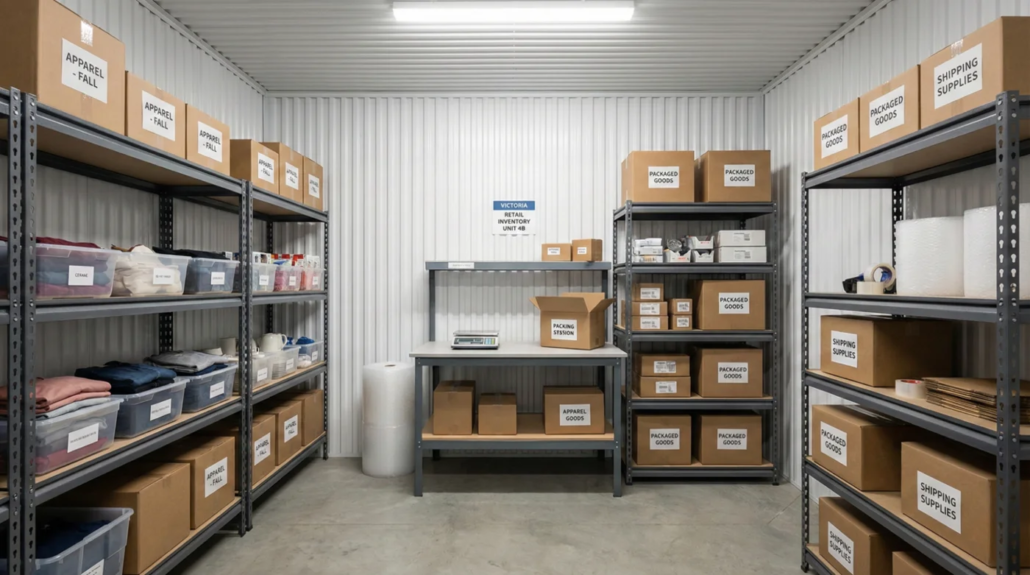
Managing inventory across multiple sales channels requires accurate tracking and organized storage. Off-site storage units can be arranged as mini-distribution hubs, holding packaged goods, shipping supplies, and overflow stock.
Options like Storage for Small Business allow retailers to separate fulfillment operations from customer-facing spaces, improving efficiency without expanding retail leases.
Inventory Accuracy and Organization
Physical organization is still fundamental to inventory management, even with digital tracking systems. Poorly organized stock leads to misplaced items, inaccurate counts, and wasted time.
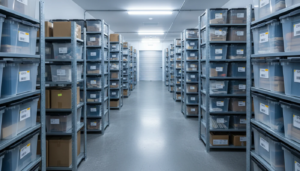
Retailers using external storage benefit most when units are clearly structured:
- Shelving by product category
- Labeled bins and cartons
- Clear access paths
- Regular audits
When inventory is easy to locate and retrieve, off-site storage enhances operations rather than slowing them down.
Technology’s Role in 2026 Inventory Planning
Inventory software, barcode systems, and point-of-sale integrations continue to evolve. These tools allow retailers to track stock levels across locations in real time.
However, technology works best when paired with physical systems that support accuracy. Storage units that are organized, accessible, and properly sized allow digital inventory data to reflect reality.
For many Victoria retailers, combining modern software with business inventory storage creates a hybrid system that is both flexible and reliable.
Cost Control Through Smarter Storage
One of the biggest advantages of off-site storage is cost predictability. Compared to expanding retail space, storage units offer lower overhead and shorter-term commitments.
This flexibility is particularly valuable in uncertain economic conditions. Retailers can scale inventory storage up or down without renegotiating leases or relocating.
Business inventory storage in Victoria helps businesses align storage costs with actual inventory levels rather than peak assumptions.
Managing Growth Without Overextending
Growth is a goal for many retailers, but expanding too quickly can strain resources. Storage provides a buffer during periods of transition.
New product lines, pop-up events, wholesale orders, or additional sales channels can be supported through temporary or expanded storage rather than permanent space increases.
This measured approach allows businesses to test growth opportunities while managing risk.
Security and Risk Management
Inventory represents a significant investment. Protecting it is essential.
Professional storage facilities prioritize security features such as controlled access, surveillance, and well-maintained environments. For retailers without secure backrooms or alarmed stockrooms, external storage can actually reduce risk.
Our storage facility is designed with these considerations in mind, offering a dependable option for businesses storing valuable inventory.
Sustainability and Responsible Inventory Practices
Sustainability is increasingly important to both retailers and customers in Victoria. Smarter inventory management reduces waste, excess production, and unnecessary transportation.
By storing inventory locally and only carrying what is needed on-site, retailers can minimize markdowns and overstock disposal. Storage supports a more intentional approach to buying and selling.
This aligns with broader trends toward responsible business practices heading into 2026.
Choosing the Right Storage Partner
Not all storage solutions are equally suited to retail inventory. Businesses should consider proximity, access hours, unit sizes, and management quality when choosing a provider.
Pacific Rim Storage is one local option supporting Victoria retailers with storage services designed for business use. Our company works with retailers across sectors to provide flexible inventory storage that adapts as needs change.
Integrating Storage Into Long-Term Planning
Forward-thinking retailers treat storage as part of their long-term operational strategy. Inventory forecasting, marketing calendars, and supplier relationships all benefit from predictable, accessible storage.
By integrating business inventory storage in Victoria into planning discussions, retailers can respond more quickly to opportunities and challenges alike.
Final Thoughts: Preparing for Retail in 2026
Inventory management for Victoria retailers in 2026 will be defined by flexibility, efficiency, and thoughtful use of space. As retail continues to evolve, businesses that adapt their storage and inventory systems will be better positioned to thrive.
Business inventory storage in Victoria offers retailers a practical way to manage growth, support omnichannel sales, and control costs without sacrificing customer experience. When paired with strong organization and modern inventory tools, storage becomes a strategic asset rather than a logistical afterthought.
By planning ahead and treating inventory as a dynamic system, Victoria retailers can enter 2026 prepared, resilient, and ready for what comes next.