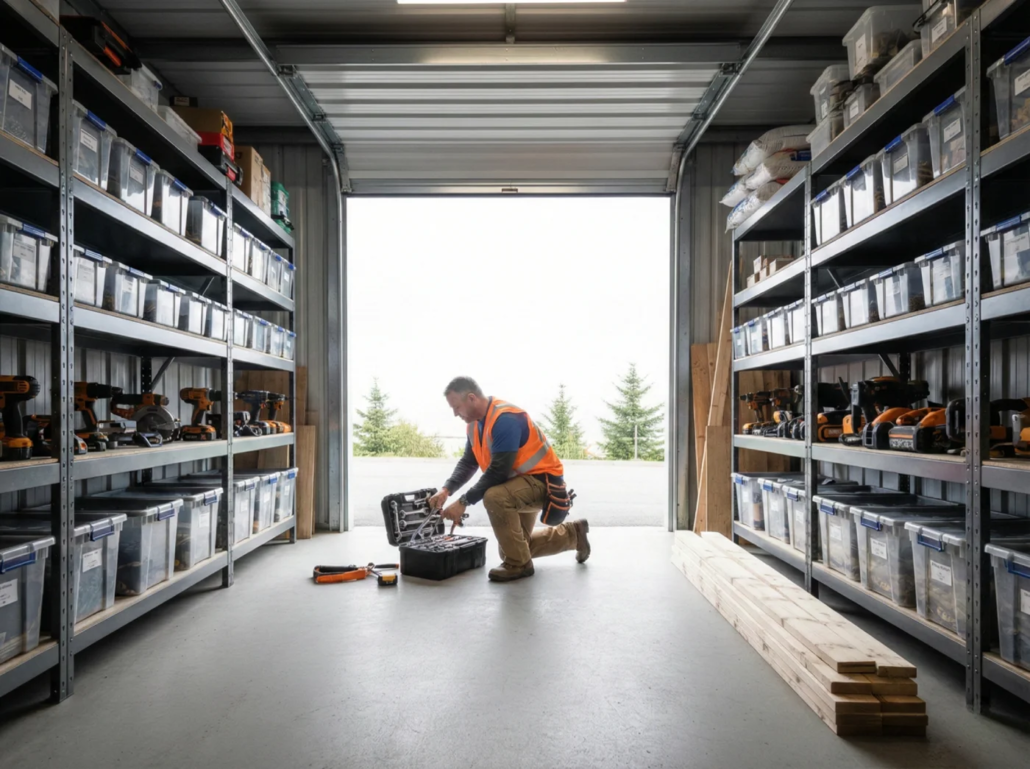
We often see Victoria contractors pull up with a truck full of tools, materials, and jobsite equipment that no longer fits at home. Garages overflow. Vans get packed tighter every month. Some contractors are working out of a spare bedroom or shared yard space, and inventory starts to spill into places it should not be.
Based on our experience at Pacific Rim Storage, contractor storage in Victoria usually becomes an issue during busy seasons. Renovation work picks up. Jobs overlap. Materials arrive early. Suddenly there is nowhere secure to put anything.
This article is for contractors and tradespeople — builders, electricians, plumbers, landscapers, and renovators. The common situation is inventory overflow during active jobs. The goal is to protect tools, keep materials organized, and avoid costly setbacks.
For many trades, especially those scaling their operations, using self-storage for contractors becomes part of running an efficient business rather than just finding extra space.
Why inventory protection matters more than people think
One thing people don’t realize until later is how quickly small storage problems turn into big operational issues. Tools left in trucks are at higher risk of theft. Materials stored at home are exposed to moisture, damage, or accidents. Jobsite storage is rarely secure long term.
When inventory is not protected, costs creep in quietly. Tools wear out faster. Materials get ruined before installation. Time is lost hunting for equipment spread across different locations.
We often see contractors underestimate how much downtime disorganization creates. When tools are damaged or missing, jobs slow down. When materials are stored poorly, reordering becomes necessary. That eats into margins quickly.
Mini storage offers a way to centralize inventory in one secure place. It reduces stress and keeps work moving smoothly. If you are unsure about the difference between storage options, it helps to understand the comparison between mini storage vs self storage in Victoria before choosing a unit.
Practical advice we share with contractors every day
Who this is for and what situation they are in
This is for contractors who are actively working and dealing with renovation projects, inventory overflow, or seasonal equipment changes. Most are not moving. They are scaling up, juggling multiple jobs, or transitioning between seasons.
The mistake people usually make
The most common mistake is relying too heavily on trucks for storage. Vehicles are great for transport, not long-term inventory management. Tools get stacked, damaged, or forgotten. Theft risk goes up when everything lives in one van overnight.
Another mistake is storing materials in uncontrolled environments. Lumber, drywall, flooring, and adhesives all react to moisture and temperature changes. Garages, sheds, and backyards often seem fine until materials warp or degrade.
What we often explain to customers
We often explain that storage is part of running a business, not an extra expense. A dedicated storage unit acts like a small warehouse. It gives contractors room to organize inventory properly.
We also explain why protection matters in coastal areas like Victoria. Moisture is constant here. Materials left in cardboard packaging absorb dampness. Tools stored on concrete floors can corrode over time.
We recommend plastic bins because cardboard absorbs moisture. This is a common issue in Victoria, especially during winter and shoulder seasons. Plastic bins also stack better and protect smaller tools from dust and spills.
Shelving inside a unit makes a big difference. Keeping items off the floor improves airflow and reduces moisture exposure.
Why access matters
Contractors often worry about access. Based on our experience, easy access is one of the main reasons mini storage works well. Being able to load materials early in the morning or drop off tools after a job keeps schedules flexible.
Labeling bins and grouping tools by trade or job saves time. One thing people don’t realize until later is how much time is wasted repacking the same gear every week.
Local context contractors deal with here
In our Victoria and Nanaimo locations, we see a wide range of contractors using storage differently. Renovation contractors often store materials between project phases. Landscapers rotate seasonal equipment. Tradespeople keep specialty tools secure when not in use.
Space is limited in many Victoria neighbourhoods. Home-based contractors often face zoning restrictions or tight parking. Storage units offer a neutral, professional solution that keeps business equipment separate from personal space.
Weather is another factor. Rain and humidity affect everything from power tools to paint. Jobsite storage is rarely dry enough long term. Even covered areas trap moisture.
We also see contractors working on heritage homes or downtown projects where onsite storage is not possible. In those cases, offsite mini storage becomes part of daily operations.
Contractor storage in Victoria is less about convenience and more about consistency. Having a reliable place for inventory simplifies planning and reduces surprises.
How contractors use mini storage effectively
Contractors who get the most out of storage treat it like a workspace extension. They keep frequently used tools near the front of the unit. Materials for upcoming jobs are grouped together. Completed job leftovers are stored separately for future use.
We often suggest doing a quick inventory check once a month. This helps prevent buying duplicates and keeps tools in rotation.
Security matters too. Storage facilities provide controlled access and surveillance. This lowers the risk compared to leaving tools in vehicles overnight.
For contractors working with clients in high-end homes, keeping tools clean and organized reflects professionalism. Storage helps maintain that standard.
Making contractor storage work long term
Contractor storage works best when it grows with your workload. Start with enough space to move comfortably — tight units slow you down. Based on our experience, most contractors underestimate how much room they need for shelving and access.
Choose a unit that allows easy loading and unloading. This reduces strain and speeds up daily routines.
Think seasonally. Equipment changes throughout the year. Storage allows you to rotate gear without cluttering vehicles or homes.
Helpful next step
After reading this, the next step is to assess where your inventory lives right now. Look at your truck, garage, or jobsite storage. Ask yourself what is exposed to damage or theft.
Make a list of tools and materials that need better protection. Consider how often you need access and what size space would allow proper organization.
If mini storage is part of your solution, talk with someone who understands contractor workflows. At Pacific Rim Storage, we regularly help contractors choose unit sizes that match their workload and growth plans.
Protecting your inventory is about protecting your time, your reputation, and your income. A well-organized storage setup keeps jobs running smoothly and reduces stress behind the scenes.
If you are unsure what kind of storage makes sense for your contracting work, our team is always happy to help you think it through before you rent.