We often see Nanaimo homeowners start a renovation with the best intentions and end up living in controlled chaos for twice as long as they planned. The furniture from the living room is stacked in the bedroom. The bedroom stuff is in the garage. The garage is now the contractor’s workspace. And nobody can find anything.
While renting a storage unit in Nanaimo does not magically make the construction faster, it makes the entire living experience significantly more manageable.
Who Is Renovation Storage Actually For?
It is for any homeowner or renter who is doing work that displaces furniture, belongings, or an entire room for more than a few days.
In Nanaimo, we see this most often with kitchen and bathroom gut jobs, full flooring replacements, and older homes getting updated electrical or insulation. These are not weekend projects. They run for weeks, sometimes longer, and the people living through them are trying to function in a house that is only partially usable. Getting the contents of the affected rooms out of the way is not a luxury. It is what lets the contractor work efficiently and lets you stay sane in the meantime.
Why Does Storage Actually Help a Renovation Go Faster?
When furniture and belongings are out of the work zone, contractors can move more freely, protect your things from dust and damage, and get more done each day.
Based on our experience, one of the most common hidden costs in a renovation is time lost to working around stuff. A flooring crew that has to shuffle furniture from room to room to lay down new floors is slower than one that walks into a clear space and gets started. Dust and debris also travel further than most people expect, and anything left in an adjacent room during drywall work or sanding is going to need a serious clean before it goes back. Getting your belongings out of the house before work starts protects them and removes a variable that consistently slows projects down.
What Is the Most Common Mistake People Make With Renovation Storage?
Waiting too long to book a unit, and then trying to store everything in one trip the day before work starts.
One thing people do not realize until later is that packing up a room properly takes more time than expected, and doing it under pressure the night before a contractor arrives almost always means things get thrown in without organization. Then, six weeks later when the floors are done and you want to move back in, you are unpacking a unit that was packed in a panic and nothing is where you thought it was. We always tell customers to book the unit a week before they need it, follow proven packing tips to box items deliberately, and label everything on the side of the box rather than the top, because boxes get stacked and you will never see a top label again.
How Much Storage Do I Need for a Renovation?
Match the unit size to the rooms being cleared, not the size of the renovation project itself.
A single room’s worth of furniture and belongings typically fits in a 5×10 unit. Two rooms, or a room with large furniture like a sectional or a king bed, usually calls for a 10×10. If you are clearing out most of the main floor for a full flooring replacement or a major kitchen renovation, a 10×15 or 10×20 gives you the room to load things in a way you can actually navigate later. When calculating the right storage unit size for your needs, our experience shows that going one size up from your first estimate is almost always worth the difference in monthly cost, because a unit you can walk into and find things in is far more useful than one packed to the ceiling.
Should I Store My Belongings Before or After the Contractor Starts?
Before. Always before, ideally by a few days.
Contractors work faster and more carefully when the space is clear from day one. Trying to clear rooms in stages while work is already underway creates a constant shuffle that costs everyone time. It also puts your belongings at risk. Drywall dust, paint overspray, and construction debris move through a house faster than most people expect. Getting everything out before the first tool hits the wall means your furniture, flooring, and personal items come back to you in the same condition they left.
How Do I Protect My Belongings in a Storage Unit During a Renovation?
Pack with moisture in mind, keep heavy items on the floor, and leave yourself a clear path to anything you might need mid-renovation.
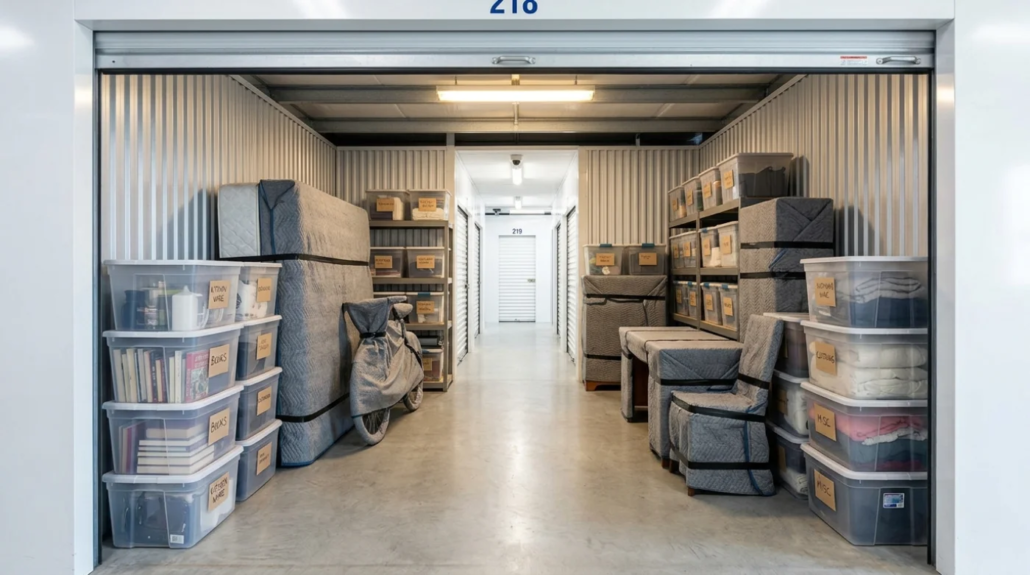
Nanaimo’s coastal climate means humidity is a real factor, especially if your renovation runs through fall or winter. We recommend plastic bins over cardboard because cardboard absorbs moisture and will soften and degrade over time in a storage environment. As a standard best practice for properly storing belongings in a self-storage unit, we advise wrapping upholstered furniture in breathable moving blankets rather than plastic sheeting, because plastic traps condensation against the fabric. Store mattresses upright rather than flat to save floor space and keep them from collecting dust on the top surface.
Leave an aisle down the middle of your unit. Renovations almost always surface a need for something you packed away, and being able to get to it without unloading half the unit saves a lot of frustration.
Local Context: Renovations in Nanaimo Have Their Own Timing
Nanaimo has a large stock of older homes, particularly in areas like South Nanaimo, the Harewood neighbourhood, and along the waterfront corridors, where character homes built decades ago are being updated by new owners. These renovations often uncover more than expected once the walls open up, and timelines stretch. A project estimated at three weeks becomes five or six.
In our Nanaimo location, we see this pattern every season. Customers who planned to store for a month extend to two. Customers who thought they would only clear one room end up clearing three when the scope of the work expands. Month-to-month rental terms matter here for exactly that reason. Pacific Rim Storage offers flexible terms because renovation timelines are genuinely hard to predict, and locking someone into a fixed contract for a project that might run longer does not serve them well.
Nanaimo winters are also worth factoring in. If your renovation is running from October onward, keep the moisture considerations in mind for anything in storage. Plastic bins, breathable covers, and a moisture barrier on the unit floor go a long way.
Final Thoughts
Renovation storage is one of those things that feels like an added expense until you are actually in the middle of a project and realize how much easier it made everything. A clear workspace, protected belongings, and a unit you can actually navigate when you need something mid-project are worth more than the monthly rental cost.
If you are planning a renovation and want to talk through what size unit makes sense for how many rooms you are clearing, our team is happy to help you think it through before you book.
Frequently Asked Questions
How long should I rent a storage unit for a home renovation?
Plan for longer than your contractor’s estimated timeline. Renovations almost always run past the original schedule, and a month-to-month rental means you are not penalized if the project extends. Most renovation storage customers stay for two to three months.
Can I access my storage unit during the renovation?
Yes, and you should plan for it. Pack with access in mind by leaving a clear path to items you might need and labelling boxes on the sides rather than the top. Confirm access hours with your facility before renting if you need early morning or evening availability.
What should I not store during a renovation?
Avoid storing anything flammable, hazardous materials, or items that require climate control in a standard unit. Renovation projects sometimes surface old paints or chemicals. Those should be disposed of properly rather than moved into storage.
Is a 10×10 storage unit big enough for a kitchen renovation?
Usually yes, for the kitchen alone. A kitchen’s worth of small appliances, pantry items, and removable furniture fits in a 10×10 comfortably if packed well. If you are also clearing an adjacent dining room or living area, step up to a 10×15.
Does Nanaimo’s weather affect what I store in a unit?
It can, especially through the wetter months. Use plastic bins instead of cardboard, wrap upholstered items in breathable covers rather than plastic, and consider a moisture barrier on the floor of the unit. These small steps make a real difference for anything stored over a Nanaimo winter.