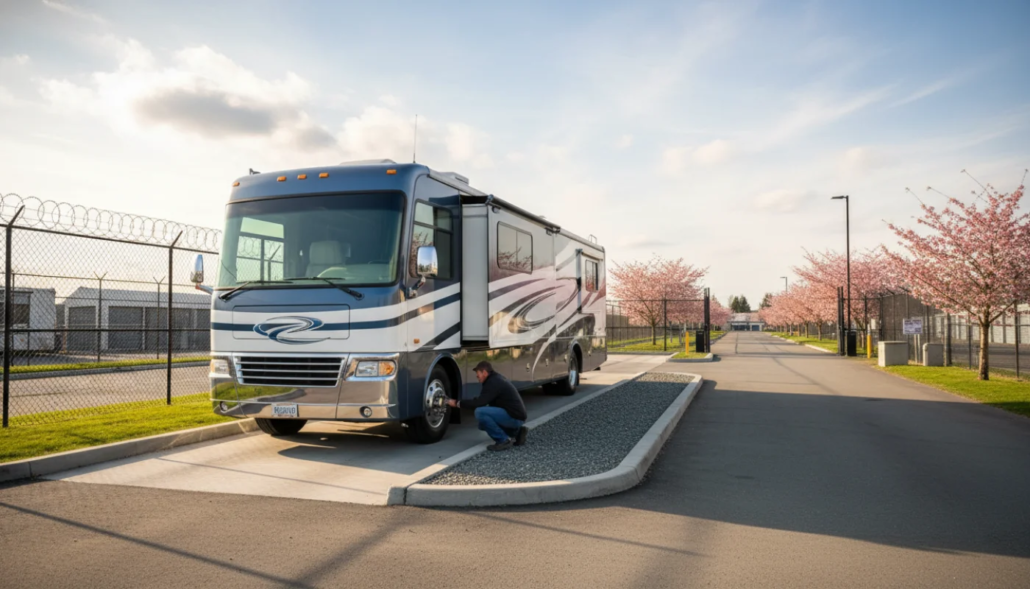
Every spring, we see the same rush at our facility. RV owners who stored their rigs over the winter start calling in late February and early March, hoping to get their unit out and road-ready before the long weekend. Some are prepared. A lot aren’t. If you’re heading into this season without a plan, this guide is for you.
Who is this guide for?
This is for Victoria homeowners and renters who own an RV, trailer, or motorhome and need a safe place to store it between seasons.
Whether you live in a strata building that bans RV parking, a rental suite with no driveway, or a home where the rig just takes up too much space, the situation is the same: you need secure and accessible storage in Victoria that won’t leave you scrambling come spring.
Why does spring RV prep actually matter in Victoria?
Victoria’s shoulder season catches a lot of people off guard. The weather turns fast, and weekends fill up quickly once the sun comes back.
We’re not talking about a long warmup period here. Victoria can go from rainy and grey in February to a dry, sunny stretch in March, and everyone wants to be out on the road at the same time. If you haven’t pulled your RV out of storage, aired it out, checked your systems, and restocked your supplies, that first long weekend is gone before you know it.
What mistake do people usually make with RV storage?
The biggest mistake we see is waiting too long to book storage in the fall, then rushing to get the unit out in the spring without actually checking its condition first.
Based on our experience, most issues with RVs come from the storage period itself. Moisture gets in. Pests find a way. Propane fittings loosen. Tires lose pressure sitting on cold pavement for months. None of these things are catastrophic on their own, but finding them the day before you want to leave for Tofino is not a fun situation.
One thing people don’t realize until later is that a bit of prep before storage saves a lot of time on the other end. A clean, covered unit that was properly winterized for storage is much easier to launch in spring than one that was parked in a hurry and forgotten about.
What do you actually need to do before pulling your RV out of storage?
Walk through the unit before you drive it anywhere. Check the roof, the seals, the tires, and the propane system before you hook up and head out.
Here’s a practical checklist we often walk customers through:
Before you leave the storage facility:
- Inspect the roof and window seals for any cracking or separation. Victoria’s wet winters can work on caulking quickly, especially on older units.
- Check tire pressure and look for sidewall cracking. Tires that sat on cold concrete all winter can lose pressure faster than you’d expect.
- Test your battery. If it wasn’t on a trickle charger, it may need a full charge or a replacement before your trip.
Once you’re home or at a service bay:
- Run water through all the lines to flush any antifreeze left from winterizing.
- Test the propane system before you’re relying on it to cook dinner.
- Check inside for any signs of moisture or pests. A mouse can do a lot of damage to wiring in a few months.
When organizing the inside of your unit, we recommend picking up proper packing and storage supplies like plastic bins rather than cardboard boxes, which quickly absorb moisture. This is a real issue in coastal areas like Victoria, especially through the winter months.
How do I choose the right RV storage in Victoria BC?
Look for a facility that offers covered or enclosed options, has proper security, and gives you easy drive-up access when you need to get in and out.
Not all RV storage is the same. Outdoor uncovered storage is the most common and often the most affordable, but Victoria’s wet winters mean a covered spot makes a real difference for your unit’s exterior over time. At Pacific Rim Storage, we offer options for different needs and budgets, and we’re used to helping people figure out which setup works for their rig and their schedule.
A few things worth asking any storage facility before you commit:
- Can you access your unit on short notice, or are there access restrictions?
- Is the lot monitored and fenced?
- Is there enough space to maneuver a longer trailer or motorhome in and out?
- What’s the surface like? Gravel versus paved can matter for stability over time.
What should you do after reading this?
Book your spring pickup date now, and while you’re at it, think about locking in your fall storage spot for next season.
Spring is the busiest time for RV storage facilities in Victoria. If you’re already stored with us, give us a call or stop by to schedule your retrieval. If you’re looking for a new spot, Pacific Rim Storage is accepting new clients, and we’re happy to help you find a storage location that fits your setup and schedule.
Don’t wait until April to start thinking about this. The people who have the best summers are the ones who planned in February.
Final Thoughts
Getting your RV out of storage shouldn’t feel stressful. With a bit of planning and a quick pre-launch inspection, you’ll be ready to make the most of Victoria’s spring and summer season without any last-minute surprises. If you have questions about availability, sizing, or what type of storage is right for your unit, reach out to our team. We’re here year-round and we know this stuff well.
Frequently Asked Questions
How much does RV storage cost in Victoria BC?
Pricing varies depending on the size of your unit and whether you choose outdoor, covered, or enclosed storage. Outdoor spots are the most affordable, while covered and enclosed options offer more protection and come at a higher rate. Contact Pacific Rim Storage directly for current pricing and availability.
Can I store a fifth wheel or large motorhome in Victoria?
Yes. Our storage facility is set up to accommodate a range of sizes, including larger fifth wheels and Class A motorhomes. It’s a good idea to give us your unit’s length and height when you call so we can confirm we have a spot that fits properly.
Do I need to winterize my RV before putting it in storage?
We strongly recommend it. Even in mild winters like Victoria’s, freezing temperatures can damage water lines and tanks that haven’t been properly drained and treated. Winterizing before storage is one of the best ways to avoid expensive repairs in the spring.
How early should I book RV storage for the fall season?
Based on our experience, late August or early September is the right time to start thinking about fall storage. Spots fill up, and if you wait until October you may have fewer options or a longer drive to the facility.
Is outdoor RV storage safe in Victoria’s climate?
It can be, depending on the facility and how you prepare your unit. Victoria’s wet winters are harder on exterior surfaces, roofing, and seals than dry climates. A quality cover and a well-maintained unit can hold up fine in outdoor storage, but covered options do offer more protection over time.