We often see homeowners looking for reliable self-storage in Victoria when trying to time their move-out and move-in dates perfectly, only to find out there’s a two-week gap they didn’t plan for. That gap, whether it’s waiting for possession, a renovation that ran long, or a closing date that shifted, is exactly where a storage unit earns its keep. If you’re moving this spring and haven’t thought about storage as part of the plan, this guide will change how you look at it.
Who is this guide for?
This is for Victoria homeowners who are in the middle of a move, or getting close to one, and need a practical way to manage the gap between leaving one place and settling into another.
Spring is the busiest moving season here. Listings go fast, possession dates get compressed, and moving companies book up quickly. If you’re selling, buying, or both at the same time, having a short-term storage option as part of your plan takes a lot of pressure off the timeline.
Why does using storage during a move actually matter?
Without a buffer, even a small timing problem, like a delayed closing or a slow renovation, can force you into expensive decisions like booking a second moving truck or paying for temporary accommodation with all your belongings in limbo.
Victoria’s spring market moves quickly. Homes around Saanich, Langford, and the Westshore get multiple offers and conditional clauses that can shift timelines fast. A storage unit gives you a place to land your belongings while the rest of the move catches up. It’s a practical tool, not a last resort.
What mistake do people usually make when moving without storage?
The most common mistake we see is trying to move everything directly from one home to the next in a single day, without any room for things to go sideways.
Moving day almost never goes perfectly. The previous owners run late. The elevator in your new building is booked out by someone else. The flooring you ordered didn’t arrive in time. When everything you own is on a truck with nowhere to go, those problems become expensive very fast. One thing people don’t realize until later is that a short-term storage unit is often cheaper than the cost of a single delay on a moving truck.
Based on our experience, the homeowners who move with the least stress are the ones who gave themselves at least a few days of overlap. They moved non-essential items into storage first, kept daily necessities at home, and then did the final move with much less to manage.
How do you actually use a storage unit during a move?
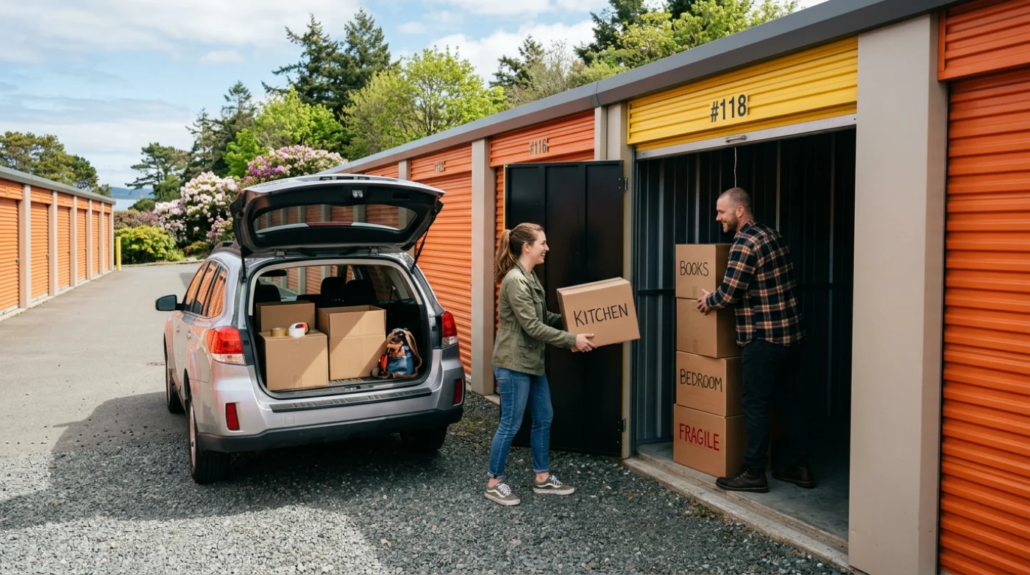
The simplest approach is a two-phase move: put non-essential items into storage first, then move the rest directly to your new home once you have access.
Here’s how that tends to work in practice:
Phase one, two to four weeks before moving day: Start moving things you won’t need day-to-day into storage. Seasonal items, extra furniture, decor, and boxes of things you’ve already packed are good candidates. This clears space in your current home, which also helps immensely if you’re staging your Victoria home for a quick spring sale.
Phase two, moving day: With less to move, the actual day is faster and simpler. You’re not rushing to fit everything onto one truck or coordinating a dozen people through a crowded hallway.
Phase three, settling in: Once you’re in your new place, pull items out of storage gradually. This gives you time to figure out where things actually belong before everything is crammed into rooms at once.
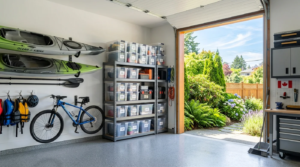
We recommend plastic bins over cardboard boxes for anything going into storage, because cardboard absorbs moisture. This matters in Victoria, where coastal humidity is a real factor even in facilities that stay dry.
What do we usually explain to customers who are mid-move?
We tell people that month-to-month storage is built for exactly this situation. You’re not locked in, and you only pay for the time you actually need.
A few other things that come up regularly when we talk to homeowners in the middle of a move:
Size matters more than price per square foot. We often see people book the smallest unit to save money, then realize mid-move that it won’t fit everything. A slightly larger unit rented for six weeks costs less than renting two small units or making multiple trips with a truck. Take a few minutes to estimate your volume before you book.
Drive-up access makes a real difference. If you’re moving things in and out more than once, a ground-floor unit you can pull a truck right up to is worth the small price difference over an upper-floor unit you have to elevator everything through.
Timing your rental start date early helps. In our Victoria and Nanaimo locations, we recommend starting your storage rental a few days before you actually need it. That way you’re not signing paperwork and moving boxes on the same afternoon.
What’s the right size storage unit for a move in Victoria?
While determining the right storage unit size in Victoria depends on your specific inventory, for most homeowners moving out of a two or three-bedroom home, a 10×10 or 10×15 unit generally covers the non-essential items you’ll move in phase one without feeling cramped.
If you’re storing everything from a full home temporarily, a 10×20 gives you room to stack and organize without things getting buried. Pacific Rim Storage can walk you through sizing based on what you’re actually moving, which is a faster way to figure it out than trying to calculate square footage on your own.
What should you do after reading this?
If your move date is within the next six to eight weeks, now is the right time to book your unit. Spring availability fills up faster than most people expect.
Get in touch with our storage facility to check current availability, confirm sizing, and lock in your start date. If your timeline is still flexible, even a rough booking gives you the option to adjust later without losing your spot.
Reach out to Pacific Rim Storage and let us know your situation. We’ll help you figure out the simplest way to get through your move without the last-minute scramble.
Final Thoughts
Using a storage unit during a move isn’t about having a backup plan. It’s about building flexibility into a process that rarely goes exactly as scheduled. For Victoria homeowners moving this spring, a short-term unit is one of the most practical tools you can have. It gives you time, it reduces the pressure on moving day, and it costs a lot less than the alternatives when things don’t line up perfectly. Plan for the gap and the move gets a lot easier.
Frequently Asked Questions
How long do most people rent a storage unit during a move?
Most homeowners in this situation rent for between two and six weeks. Some need a few days as a bridge between possession dates, while others use storage through a renovation period that can stretch longer. Month-to-month terms mean you’re not locked into anything longer than you need.
Can I access my storage unit during a move whenever I need to?
Access hours vary by facility. We recommend asking about hours before you book, because if you’re moving things in and out on evenings or weekends, a facility with restricted access becomes a real inconvenience. Our facility offers extended access hours to work around typical moving schedules.
Is it worth using climate-controlled storage during a short-term move?
For most general household items, standard storage works fine for a short rental period. If you’re storing wood furniture, electronics, artwork, or anything sensitive to humidity, utilizing climate-controlled storage in Victoria is absolutely worth the extra cost. Victoria’s coastal air is mild but consistently damp, and a few weeks in a humid unit can affect finishes and fabric over time.
What’s the easiest way to figure out what size unit I need for my move?
Make a rough list of what you’re moving into storage in phase one and think about how it would stack in a room. A 10×10 is roughly the size of a small bedroom. If you’re moving more than that, size up. It’s always easier to have a bit of extra room than to figure out a packing puzzle every time you need something.
Can I move into a storage unit before my new home’s possession date?
Yes, and this is actually one of the most common reasons people use short-term storage during a move. You can start moving non-essential items in days or even weeks before possession, which takes a lot of pressure off the final move day and keeps your current home manageable in the meantime.