A Local Situation We See Every Spring
We often see Victoria locals walk in with skis still damp from their last trip to Mount Washington. Snowboards get leaned against garage walls. Boots are stuffed into closets while helmets sit on top of shelves. Once winter ends, gear gets pushed aside wherever there is room.
For outdoor enthusiasts, this usually happens fast. One weekend it is snowing on the mountain. A few weeks later, bikes are out and paddleboards are calling. Winter sports gear ends up stored wherever it fits, not where it should be.
Based on our experience at Pacific Rim Storage, off season ski and snowboard storage in Victoria is something many people do not think about until fall. By then, gear may already be damaged.
This article is for homeowners, renters, and students who ski or snowboard and want their gear to last longer. The situation is simple. Winter is over. Storage season has begun.
Why Proper Storage Actually Matters
One thing people do not realize until later is how much off season storage affects performance. Skis and snowboards are built for cold, dry conditions. They do not handle moisture, heat, or pressure very well over long periods.
When gear is stored incorrectly, we often see rusted edges, dried out bases, warped boards, and mold inside boots. These problems do not always show up right away. They usually appear when the season starts again, which is the worst time to deal with repairs.
There is also a space issue. Many Victoria homes and apartments do not have garages or basements. Closets fill quickly. Balconies are tempting but risky. Moist air, temperature swings, and salt in the air all take a toll.
Good storage protects your investment and keeps your living space functional through the warmer months.
Practical Advice We Share With Customers All the Time
If you want more general guidance on packing and protecting seasonal items, start with our Packing Tips page.
Who This Is For and What Situation They Are In
This advice is for outdoor enthusiasts who rent or own homes and need winter storage. Most are not moving or renovating. They are simply transitioning from winter sports to summer activities and need space.
The Mistake People Usually Make
The most common mistake is storing gear dirty or damp. Skis get put away with road grime and salt still on the edges. Snowboards are stored without drying fully. Boots are zipped up while still damp inside.
Another mistake is leaving gear under pressure. Skis stacked unevenly or boards leaning at awkward angles can warp over time.
What We Often Explain to Customers
We often explain that off season storage starts with preparation, not the storage unit itself.
Clean everything first. Skis and boards should be wiped down and fully dried. Moisture leads to rust. This is especially true in coastal areas like Victoria where humidity sticks around longer. If you want a detailed checklist from a trusted outdoor retailer, REI covers this well in How to Store Winter Gear for the Season.
We recommend waxing skis and snowboards before storage. The wax acts as a protective layer on the base. It prevents drying and oxidation while the gear sits unused. SKI Magazine also supports this approach in How to Properly Store Your Ski Gear for the Summer.
Boots need extra attention. Remove liners and let everything air dry completely. We suggest storing liners separately if possible. This allows airflow and reduces the chance of mold.
Helmets, gloves, and soft gear should be clean and dry. Sweat left in fabric attracts moisture and bacteria over time.
Why Container Choice Matters
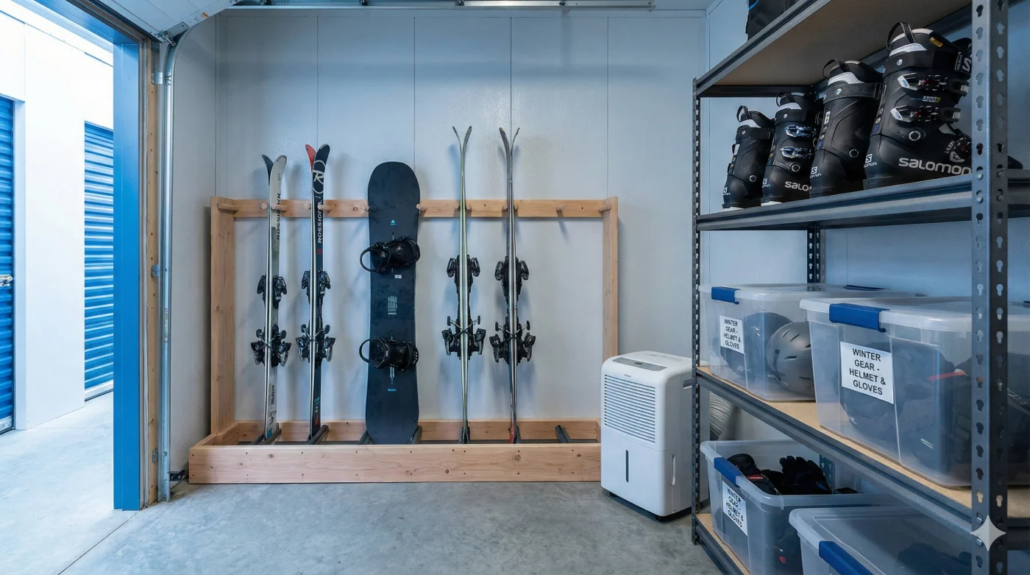
We recommend plastic bins because cardboard absorbs moisture. This is a common issue in Victoria, especially during spring and fall. Plastic bins also protect gear from pests and accidental spills.
Do not seal damp gear in airtight containers. Everything should be completely dry before lids go on.
How to Store Skis and Boards Properly
Store skis flat or upright with even support. Avoid leaning them in a way that puts pressure on the tips or tails. Snowboards should be stored flat if possible.
Bindings do not need to be loosened fully, but releasing some tension can help preserve springs over long storage periods.
Local Context That Makes Storage Different Here
In our Victoria and Nanaimo locations, we see how climate plays a role in winter sports storage. Coastal moisture is the biggest factor. Even indoor spaces can stay damp for long stretches.
Many people try to store gear on balconies. We understand why. Space is limited. The problem is exposure. Temperature changes, moisture, and salt air speed up wear.
Another local factor is lifestyle. Outdoor gear does not stop with skis and boards. Bikes, surfboards, camping gear, and kayaks all compete for space. Winter storage often overlaps with summer gear coming out. If you are rotating multiple types of gear, this guide can help you plan ahead: Storing Kayaks, Bikes, and SUPs: A Victoria Owner’s Guide.
That overlap is where storage services make sense. It is not about storing everything forever. It is about rotating gear by season so your home stays usable.
We also see students and renters dealing with shared spaces. Storing expensive gear in common areas increases the risk of damage or theft.
Making Ski and Snowboard Storage in Victoria Easier
Ski and snowboard storage in Victoria works best when you think seasonally.
Before putting gear away, ask yourself where it will live for the next six months. If the answer is a damp closet or an outdoor shed, it may be worth reconsidering.
Short term storage units allow you to keep gear in a dry, secure environment during the off season. Access matters too. You should be able to grab gear easily when the first snowfall hits.
Label bins clearly. You may think you will remember what is inside. Based on our experience, people rarely do.
Keep gear off the floor if possible. This adds another layer of protection from moisture.
What to Do After Reading This
After reading this, the next step is to check your gear now, not in the fall. Look for moisture, dirt, or damage that should be addressed before storage.
Set aside time for cleaning and drying. It does not take long, but it makes a big difference.
Measure the space where you plan to store your gear. Be realistic. If space is tight or conditions are not ideal, consider off site storage early. This avoids scrambling later when summer gear takes over.
If storage is part of your plan, talk with someone who sees this every day. At Pacific Rim Storage, we spend a lot of time helping outdoor enthusiasts figure out seasonal storage that fits their routine.
Winter gear is built to handle mountains, snow, and speed. It still needs the right rest between seasons. A little planning now means your skis and snowboard are ready the moment winter returns.
If you are unsure what kind of storage setup makes sense for your gear, our team is always happy to talk it through with you before you store.