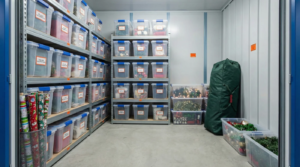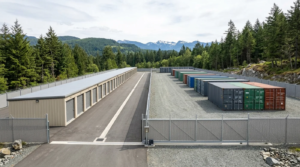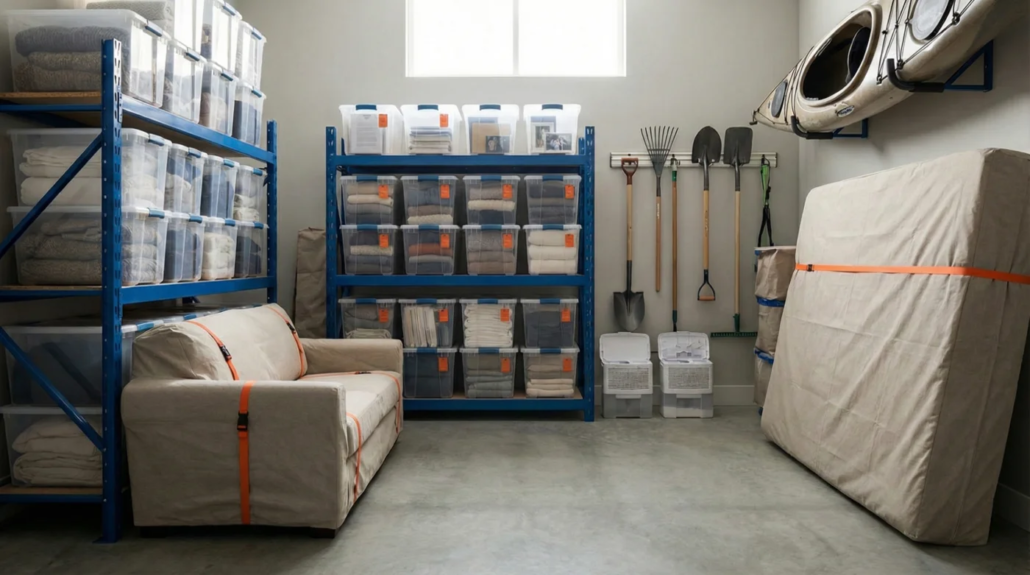
Proper preparation is the most effective way to protect items during the winter months. Whether storing items at home or in a storage unit, these steps help reduce moisture-related risks. Following proven packing tips before storage can significantly reduce the chance of damage during Victoria’s damp winters.
1. Clean and Dry Items Completely
All belongings should be cleaned and fully dried before storage. Dirt and moisture can contribute to mold growth over time.
- Wash and dry clothing thoroughly
- Wipe down furniture and hard surfaces
- Allow mattresses and cushions to air out
- Ensure outdoor gear and equipment are completely dry
Even small amounts of moisture can cause problems when items are sealed and stored for long periods.
2. Use Moisture-Resistant Packing Materials
Choosing the right containers makes a significant difference.
- Heavy-duty plastic bins with tight-fitting lids
- Vacuum-sealed bags for clothing and linens
- Acid-free boxes for photos and documents
- Original packaging for electronics when available
Plastic bins are especially useful in damp climates because they create a barrier against moisture. Maintaining indoor humidity within recommended ranges during the rainy season can further reduce risks, as outlined in rain-season humidity targets for mould-safe comfort.
3. Keep Items Off the Floor
Concrete floors can release moisture, increasing the risk of condensation.
To reduce exposure:
- Use pallets or shelving
- Elevate furniture with blocks
- Avoid placing boxes directly on the ground
This allows airflow and minimizes contact with cold, damp surfaces.
4. Wrap Furniture Carefully
Furniture should be protected with breathable materials rather than plastic.
Recommended options include:
- Cotton sheets
- Furniture blankets
- Fabric covers
Avoid sealing items tightly in plastic, which can trap moisture and accelerate damage.
5. Take Extra Care With Electronics
Electronics are particularly sensitive to humidity.
Preparation tips include:
- Removing batteries
- Using anti-static wrapping
- Adding silica gel packets
- Storing items in climate-controlled environments when possible
Health Canada’s guidance on moisture and mould indoors highlights why controlling humidity is critical for protecting sensitive household items.
Why Storage Units Are Often a Better Option Than Home Storage
While some people store belongings in garages, sheds, or spare rooms, these areas often lack insulation and moisture control. Storage units provide a more consistent environment, particularly during winter.
Many residents choose dedicated storage facilities to reduce exposure to damp conditions and free up space at home. Victoria self storage options are commonly used for winter storage, offering a range of unit types suited to seasonal needs.
Benefits of using a storage unit during winter include:
- Improved protection from moisture
- Cleaner, more controlled environments
- Enhanced security compared to outdoor storage
- Flexibility to store only what’s needed for the season
Additional Tips for Keeping Belongings Safe All Winter
Beyond preparation and storage location, small habits can further reduce the risk of damage.
Use Moisture Absorbers
Desiccant packs or moisture-absorbing products help control humidity inside containers and storage units.
Allow Airflow
Avoid packing items too tightly. Leaving small gaps between boxes allows air to circulate.
Check Items Periodically
Visiting stored items occasionally provides peace of mind and allows early detection of moisture issues.
Avoid Storing Damp Items
Items exposed to rain or moisture should be dried fully before storage, even if they appear dry on the surface.
Understanding Climate-Controlled Storage
Climate-controlled storage maintains more stable temperature and humidity levels, making it well suited for sensitive belongings such as electronics, documents, artwork, and upholstered furniture.
In damp coastal climates like Victoria’s, these units are often used for long-term or winter storage to reduce the impact of fluctuating conditions. Some residents also compare options in nearby communities, such as heated storage in Mill Bay or learning whether heated storage is needed in Nanaimo, when deciding on climate protection for valuable items.
Final Thoughts
Victoria’s winters may be mild, but they present unique challenges when it comes to protecting stored belongings. Persistent moisture and high humidity can cause long-term damage if items are not prepared and stored properly.
By understanding which items are most vulnerable, taking time to prepare them carefully, and choosing appropriate storage solutions, it’s possible to keep belongings safe throughout the winter months. Thoughtful storage practices help preserve furniture, clothing, equipment, and personal items so they remain in good condition year after year.
For those seeking winter storage in Victoria, Pacific Rim Storage is among the locally focused options available, offering storage environments designed with the region’s climate in mind.