We often see people drop off a vehicle for what they think will be a quick stint in storage, then pick it up months later wondering why it won’t start or why the tires have gone flat. Long-term car storage takes a bit more preparation than most people expect. As we often emphasize in our expert guide to preserving your vehicle in long-term self-storage, getting these preparation steps right upfront saves a lot of frustration later.
Who Is This For?
This comes up most often for snowbirds, students, people between moves, and anyone with a second vehicle they’re not driving regularly.
Victoria has a large population of part-year residents who head south for the winter. It also has a fair number of people in transition, waiting on a new home, finishing a work contract, or heading overseas for a few months. If you’ve got a vehicle sitting idle for more than four to six weeks, long-term storage is worth doing properly. Leaving a car parked on the street or in a driveway without any preparation is where most of the problems start.
What Situation Usually Leads Someone Here?
Seasonal travel, extended time away, a vehicle that’s temporarily out of use, or a collection car that only comes out in summer.
The snowbird situation is probably the most common one we see at our facility. Someone spends October through April in Arizona or Palm Springs and needs somewhere safe to leave their car. University students navigating the Victoria summer move-out rush who are heading back to the mainland are another frequent group. So are people mid-renovation who’ve lost garage access and have a second car with nowhere to go. Classic car owners are a smaller but consistent group too. A restored vehicle sitting in an unprotected spot through a Victoria winter is a real concern for anyone who’s put time and money into it.
What Mistake Do People Usually Make With Long-Term Car Storage?
Not preparing the vehicle before storing it. Most people just park it and walk away.
Based on our experience, the most common issue is people skipping the preparation steps entirely. A car that sits for several months without prep will almost always have at least one problem when it comes back out. Tires go flat from sitting in one position too long. Batteries drain completely. Old fuel breaks down and can gum up the fuel system. Rodents find their way in through gaps and set up inside the engine bay or interior. None of these are catastrophic if you catch them early, but they’re all avoidable with a bit of work before you hand over the keys.
How Should You Prepare a Car for Long-Term Storage?
Fuel stabilizer, a trickle charger, tire prep, a good cover, and a quick check of fluids will cover most of what you need.
Here’s what we usually walk customers through:
Fill the tank before storing. A full tank leaves less room for condensation to form inside, which reduces the chance of rust developing in the fuel system. Add a fuel stabilizer as well because untreated fuel starts to degrade after about 30 days.
Connect a trickle charger if you have access to power at your storage spot. Batteries lose charge sitting idle, and a dead battery after several months often needs a full replacement rather than just a jump.
Inflate your tires slightly above the recommended pressure before storing. Tires lose pressure slowly over time, and starting a bit high reduces the chance of flat spots forming from the weight of the car sitting in one position.
Give the car a wash and wax before it goes in. This matters more than people think because any dirt, bird droppings, or sap left on the paint can bond to the surface over months and become difficult to remove without damaging the finish.
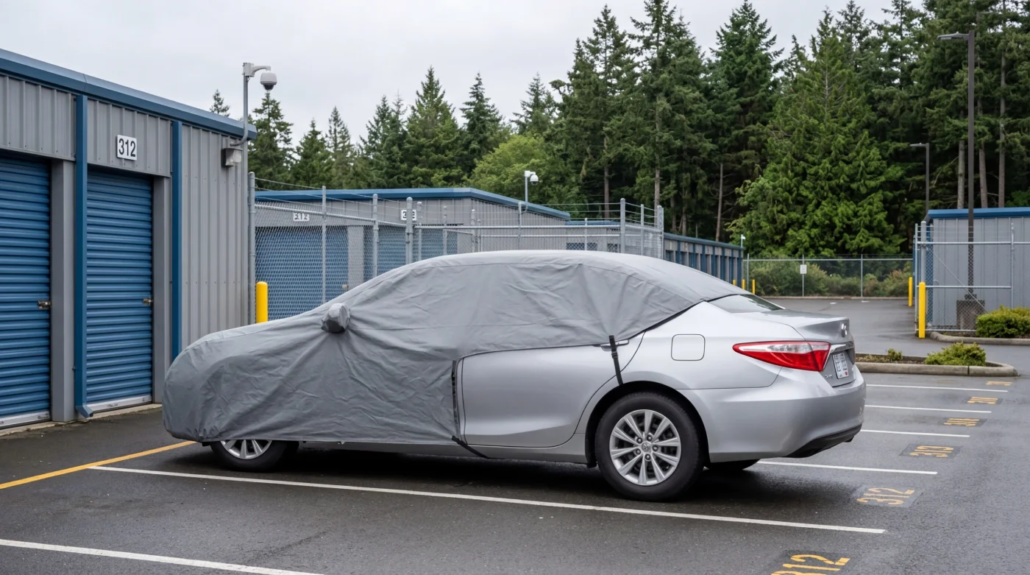
Use a breathable car cover rather than a plastic tarp. Plastic traps moisture underneath, which causes more damage than it prevents. A fabric cover lets air circulate while keeping dust and debris off the vehicle.
If you’re storing a vehicle for six months or more, talk to your mechanic about whether an oil change before storage makes sense. Used oil contains contaminants that can cause corrosion if left sitting in the engine long-term.
How Does Victoria’s Climate Affect Stored Vehicles?
The damp coastal winters here are harder on vehicles than most people from drier parts of BC expect.
Victoria sits on the ocean and gets sustained wet weather from October through March. That moisture finds its way into everything if a vehicle isn’t properly covered or stored. We recommend breathable covers specifically because of this. Condensation under a sealed cover, combined with months of coastal humidity, creates the exact conditions where rust starts to form. One thing people don’t realize until later is that the damage isn’t always visible right away. You might pick up the car in April and think it looks fine, then notice rust beginning under a door seal or along a rocker panel by summer.
Booking a space at a secure storage facility in Victoria offers a meaningful step up from leaving a vehicle parked on a damp street or open driveway. It keeps direct rain and debris off the car and adds a layer of security that an unmonitored driveway doesn’t offer.
What Should You Do After Reading This?
Prep the vehicle first, then book the storage. Don’t do it the other way around.
If you’re planning to store a car for a season or longer, run through the preparation checklist before your storage date, not after. It’s easier to top up fluids, add a fuel stabilizer, and grab a car cover while the vehicle is still in your driveway than to try to sort it out on storage day.
Pacific Rim Storage offers outdoor storage options for vehicles at our facility. If you’re not sure which size storage unit is right for you or how long you’ll be storing your vehicle, reach out and we’ll help you figure it out. Our team deals with vehicle storage questions regularly and can walk you through what to expect.
Final Thoughts
Long-term car storage done right is mostly about preparation. The storage itself is the easy part. Take an hour before you drop the vehicle off to get it ready, use the right cover, and make sure someone can check on it if you’re going to be away for a long stretch. A little bit of planning on the front end makes a real difference in what you come back to.
Frequently Asked Questions
How long can a car sit in storage before it has problems?
Most vehicles start showing issues after 30 to 60 days without any preparation. With proper prep including fuel stabilizer, a trickle charger, and correct tire inflation, a car can sit for six months or more without significant problems.
Do I need to keep insurance on a car in long-term storage in BC?
In British Columbia, you can put a vehicle on storage insurance through ICBC, which reduces your premium while the car isn’t being driven. Talk to your insurance broker before your storage period starts to make sure you’re covered correctly.
Should I start my car periodically while it’s in storage?
This is debated, but a single short idle doesn’t do the engine much good and can actually introduce moisture into the exhaust system without fully burning it off. If you can’t take the car for a proper drive, it’s generally better to prep it correctly and leave it than to run it briefly and park it again.
Is outdoor car storage okay for a classic or collector vehicle?
A covered outdoor space with a quality breathable cover works for many collector vehicles, especially for shorter storage periods. If the vehicle is particularly valuable or you’re storing it through a full wet season, an enclosed option is worth considering.
How do I keep rodents out of my stored car?
Steel wool pushed into exhaust openings and fresh air intakes, along with rodent repellent pouches inside the cabin, reduces the risk significantly. We also recommend removing any food wrappers or items from the interior before storing, since even small traces of food attract mice.