We see it all the time. A homeowner in the Departure Bay area finishes a basement renovation and suddenly has nowhere to put the patio furniture, the garden tools, and three seasons worth of sports gear. The garage is full. The house is full. And the backyard is starting to look like a staging area.
That situation is more common than people think around here, and it’s exactly why outdoor storage in Nanaimo is worth understanding before you end up scrambling.
Who Actually Rents Outdoor Storage in Nanaimo?
The short answer: a lot more people than you’d expect. Homeowners, renters, contractors, and small business owners all use outdoor storage containers regularly, often for very different reasons.
Homeowners dealing with renovations are one of the biggest groups we work with. When you’re redoing a kitchen or adding a suite, your stuff has to go somewhere. Renters moving between places, especially during the busy summer months around the ferry terminals and the university, often need a short-term spot to park their belongings. Secure self-storage for contractors working job sites across the mid-Island allows them to keep tools and materials safe overnight without hauling everything back and forth.
Small retailers are another group we often see reach out to our storage facility when backroom space runs out and inventory has nowhere to go.
While outdoor storage is perfect for vehicles, RVs, and robust patio sets, indoor units are better suited for household goods. If you are clearing out your house for a contractor, learn how indoor units can streamline your project in our guide to using storage during a home renovation in Nanaimo.
What Situations Push People Toward Outdoor Storage Containers?
Most people come to us when they’ve run out of options at home. The most common situations we deal with are renovations, seasonal storage, downsizing, and business inventory overflow.
Renovation is probably the most urgent because it happens fast. One day you’re tearing out drywall and the next day you need somewhere to put a couch, a dining table, and a freezer. Personal downsizing storage is the other big reason people come to us, especially when transitioning from a house in a place like north Nanaimo to a smaller condo closer to the waterfront. You’re not ready to sell everything, but you can’t fit it all either.
Seasonal storage is huge on Vancouver Island because people actually use their outdoor gear year-round. Kayaks, paddleboards, bikes, camping equipment, all of it needs to go somewhere between uses, and a lot of homes just don’t have the space.
What Mistake Do People Usually Make With Outdoor Storage?
The most common mistake is assuming any container or unit will do the job. People often choose the cheapest or closest option without thinking about moisture, access, or security.
On the coast, moisture is the real problem. Nanaimo sits right on the ocean, and even on the driest summer days, that marine air gets into everything. We recommend plastic bins or sealed totes over cardboard boxes because cardboard absorbs moisture. Over a few weeks, it breaks down, and whatever is inside can get damp and mildewed. One thing people don’t realize until later is that wrapping furniture in plastic wrap actually traps moisture in rather than keeping it out. Breathable moving blankets are a much better choice for long-term storage in this climate.
Security is the other thing people overlook. A padlock on a basic container is a start, but not all storage facilities offer the same level of access control or on-site monitoring. It’s worth asking about that upfront.
If you are also storing sensitive furniture during a move or home renovation, our local guide to Nanaimo self storage will help you find the perfect indoor unit and maximize your space.
What Do We Usually Explain to Customers About Outdoor Storage Containers?
The first thing we explain is that “outdoor storage” covers a lot of different products, and not all of them are the right fit for every situation.
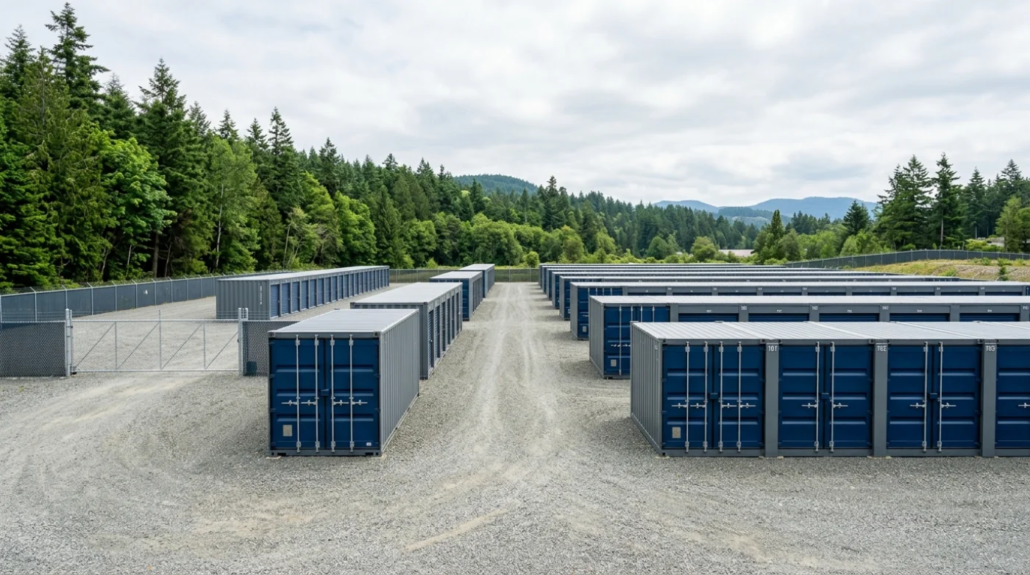
There are traditional self-storage units with outdoor drive-up access, portable storage containers that get dropped at your property, and larger industrial-style containers that work better for commercial use. The right choice depends on how often you need to access your stuff, how long you plan to store it, and what you’re actually storing.
Based on our experience, people who only need occasional access, like grabbing the ski gear once before a trip to Mount Washington, do well with a standard outdoor drive-up unit. People who need daily or weekly access are usually better served by something closer or with better on-site access hours.
We also help customers determine which storage unit size is right for their needs, because most people underestimate how much space they actually require. It’s almost always worth going one size up. You’ll use the room, and it’s a lot easier than renting a second unit six weeks later when you realize the first one is packed to the ceiling.
How Does Nanaimo’s Climate Affect Outdoor Storage?
Nanaimo gets more precipitation than a lot of people expect, and the salt air from the harbour and the Strait of Georgia adds another layer of concern for stored items.
Even in summer, coastal fog rolls in at night and morning moisture can settle on metal, wood, and fabric. In winter, it’s not uncommon to see sustained wet periods that last weeks. A storage container or unit that isn’t properly sealed or elevated is going to let moisture in over time.
Pacific Rim Storage designs our outdoor units with this climate in mind. Units are constructed to keep water out, and the facility sits on a well-drained site. That matters more than it sounds during a typical Nanaimo winter.
For anything metal, like bikes, tools, or filing cabinets, we suggest adding a few moisture-absorbing packets to the container. It’s a small thing, but it makes a difference over a long storage period.
What Should You Look for in a Nanaimo Outdoor Storage Facility?
Look for secure fencing, good lighting, monitored access, and a site that doesn’t collect standing water. Those four things matter more than price, at least in the long run.
Ask about access hours. Some facilities lock down early in the evening, which is a problem if you work long days and need to get in at 6 p.m. Ask whether the facility is monitored, and find out what the gate access system looks like. Keypad access is standard at most decent facilities, but it’s worth confirming.
Drainage is something most people never think to ask about, but in Nanaimo’s rainy season it’s a real consideration. A low-lying lot that floods in January is going to cause problems no matter how good your unit is.
Our storage facility is located to be convenient to central and north Nanaimo, with straightforward access and reasonable hours that work for most schedules.
What Should You Do After Reading This?
The most useful next step is figuring out your timeline and your rough size needs before you call anyone. If you know approximately how long you’ll need storage and can make a rough list of what you’re storing, you’ll get a much more useful answer from any facility you contact.
If you’re in Nanaimo and ready to get started, Pacific Rim Storage is a good first call. You can ask about available unit sizes, current availability, and pricing without any commitment. Starting that conversation earlier rather than later gives you more options, especially during busy moving seasons in spring and summer when units fill up faster than most people expect.
Final Thoughts
Outdoor storage in Nanaimo is one of those things that seems straightforward until you’re actually dealing with the coastal weather, the sizing questions, and the access logistics. Getting it right from the start, whether you’re a homeowner in the middle of a reno or a contractor needing a secure spot for equipment near a Nanaimo job site, saves a lot of hassle.
The basics matter: moisture protection, security, the right size, and a facility that takes the local climate seriously. Keep those in mind and you’ll be in good shape.
Frequently Asked Questions
Can I access my outdoor storage unit in Nanaimo year-round?
Yes, most outdoor drive-up units in Nanaimo are accessible year-round. Our storage facility offers access seven days a week, though it’s always worth confirming hours before you sign a rental agreement, especially if you have an unusual schedule.
How do I protect my belongings from moisture in a Nanaimo storage unit?
To successfully preserve your belongings in self-storage, use plastic bins or sealed totes instead of cardboard, add moisture-absorbing packets for metal items, and cover upholstered furniture with breathable moving blankets rather than plastic wrap. The plastic traps humidity and can cause more problems than it solves in a coastal climate.
What size outdoor storage container do I need for a one-bedroom apartment?
A 5×10 unit handles the basics for a one-bedroom, but if you’re storing furniture and appliances as well, a 10×10 is usually the safer bet. Most people find they need more room than they initially planned for once everything is packed up.
Is outdoor storage in Nanaimo cheaper than indoor storage?
Outdoor drive-up units are generally priced lower than fully enclosed indoor units, though the difference varies by facility and size. For most household goods stored in properly sealed containers, outdoor units in Nanaimo work well and offer good value.
How far in advance should I book storage in Nanaimo?
For moves happening in May through September, booking at least two to four weeks ahead is a good idea. Nanaimo sees a lot of summer movement, especially with families relocating before the school year. Outside of peak season, you usually have more flexibility, but calling early never hurts.