We often see Victoria retailers run out of backroom space long before they run out of inventory, prompting them to look for flexible small business storage solutions. It happens a lot on Government Street, in Market Square, and along the smaller commercial strips in Vic West and Cook Street Village. The store looks great from the front. Behind the scenes, boxes are stacked to the ceiling, staff can barely move, and the owner is turning down supplier deals because there’s nowhere to put the stock.
If that sounds familiar, you’re not alone. And there’s a straightforward fix that a lot of local businesses are already using.
Who Is This For?
This is for small business owners in Victoria who are managing physical inventory. That includes retail shops, e-commerce sellers working out of a home or small office, seasonal vendors, market vendors, and contractors who need to protect their equipment and inventory between jobs.
If your backroom, garage, or spare room is doing the work of a warehouse, this guide is for you.
Why Does Inventory Overflow Become Such a Problem for Victoria Businesses?
Victoria’s commercial rental market is tight, and backroom space is almost always an afterthought in lease agreements. Most small retail spaces here were not designed with serious storage in mind. You end up paying prime commercial rent for square footage that’s being used to stack boxes rather than serve customers.
Beyond the cost, cramped backrooms slow down your staff. Pulling orders takes longer. Receiving new stock becomes a project. Seasonal changeovers feel like a full day of work. The operational drag adds up quietly over time, and most business owners only notice it when they’re deep in it.
What Mistake Do Small Businesses Usually Make With Inventory Storage?
The most common one we see is waiting too long. Business owners will tolerate an overflowing backroom for months before looking for a solution, usually because they assume external storage is more complicated or expensive than it actually is.
The second mistake is renting too small when they do make the move. They solve the immediate problem but leave no room to grow, and within a season they’re back in the same situation. Sizing up slightly from the start almost always pays off.
What Do We Often Explain to Business Customers About Using a Storage Unit?
One thing people don’t realize until later is that a storage unit functions as a flexible extension of your business, not just a place to dump overflow, and knowing how to get the most out of your storage space turns it into a real operational tool. You can run seasonal stock rotations through it, hold promotional inventory before a launch, or use it as a receiving buffer when a large supplier shipment comes in.
Based on our experience working with small businesses in Victoria and Nanaimo, the ones who get the most out of their storage rental treat the unit like a proper stockroom. They use shelving, label everything clearly, and build a simple system for rotating stock in and out. It doesn’t have to be complicated. It just has to be intentional.
How Should a Small Business Organize a Storage Unit for Inventory?
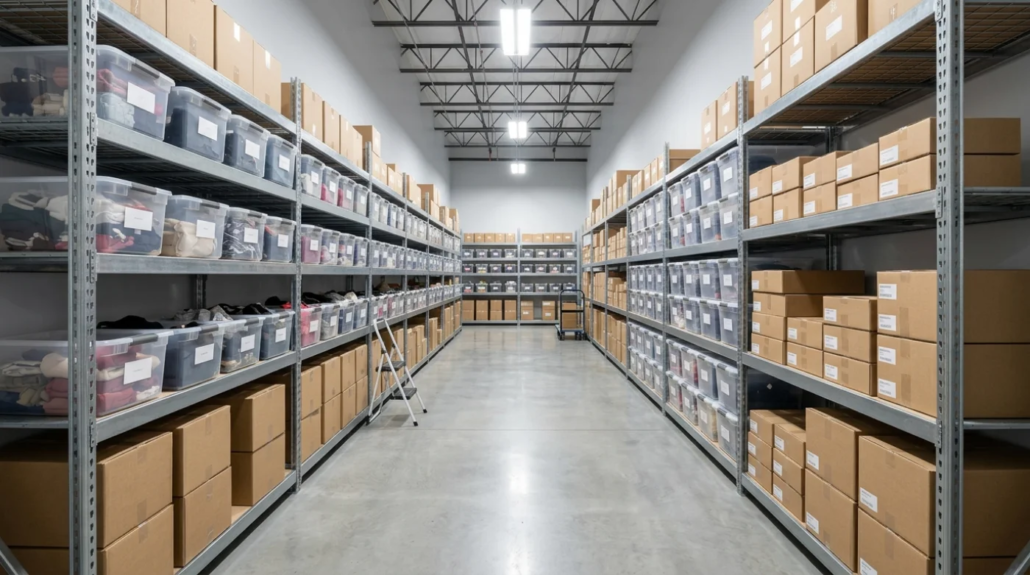
Start with shelving along the walls. Stacking boxes directly on the floor in a coastal climate like Victoria’s is risky because moisture can wick up from concrete, especially through fall and winter. Shelving keeps inventory off the ground and makes everything easier to see and access.
We also recommend plastic bins or sealed boxes over open cardboard for anything being stored longer than a few weeks. Cardboard absorbs humidity, and Victoria’s damp winters are hard on packaging. Sealed plastic keeps product condition consistent and protects against the kind of slow moisture damage that’s easy to miss until it’s too late.
Group inventory by category or season, with the stock you access most often closest to the door. If you’re doing regular pickups, drive-up access at our storage facility makes loading and unloading fast and straightforward. You’re not carrying boxes through a hallway or up a staircase.
What Size Storage Unit Does a Small Victoria Business Actually Need?
Finding the right storage unit size in Victoria depends heavily on your specific inventory volume and how often you’re rotating stock. A 5×10 unit works well for smaller retailers or e-commerce sellers managing a moderate amount of product. A 10×10 or 10×15 is more appropriate for businesses with seasonal peaks, larger items, or higher volume.
The team at Pacific Rim Storage can help you figure out the right size based on your actual situation. A short conversation about what you’re storing and how often you need access usually gets you to the right answer quickly. Don’t guess on this one. Too small costs you more in the long run because you’ll either outgrow it fast or start leaving inventory somewhere less suitable.
How Does Seasonal Retail Demand Affect Storage Needs in Victoria?
Victoria’s retail calendar has real peaks. The summer tourist season on the Inner Harbour and surrounding areas drives significant sales volume for a lot of local businesses. Christmas is obviously a major push. Then there are the quieter months in between where you’re holding stock without moving it as quickly.
A storage unit lets you buy ahead of those peaks without clogging your retail or work space for months at a time. You can bring in a larger supplier order when pricing is good, stage the inventory off-site, and pull from it as needed through the busy season. That kind of flexibility is hard to replicate when your only option is the backroom.
What’s the Right Next Step for a Victoria Business Owner Reading This?
Take a walk through your backroom or storage area this week and ask honestly whether it’s working for you. If staff are working around boxes, if you’ve turned down inventory deals because of space, or if your seasonal changeovers are eating up half a day, those are signs the current setup isn’t serving your business.
Reach out to our storage services team to talk through your situation. We work with small businesses regularly and can give you a practical size recommendation and talk through access options that fit your operations.
Frequently Asked Questions
Can a small business use a self-storage unit as a regular stockroom?
Yes, and many Victoria businesses do exactly that. With proper shelving and an organized system, a storage unit works well as a dedicated inventory space, especially for businesses without adequate backroom space in their commercial lease.
Is it cost-effective to rent storage instead of larger commercial space?
For most small retailers, yes. Commercial space in Victoria is expensive per square foot. A storage unit at a fraction of that cost gives you the overflow capacity without committing to a larger, more expensive lease.
How often can I access my inventory in a storage unit?
Our facility offers flexible access hours so you can pick up or drop off stock when it fits your schedule. If you’re doing regular inventory runs, it’s worth asking about access hours when you book.
What’s the best way to track inventory stored off-site?
A simple spreadsheet or inventory app works well. Log what goes in and out each time you visit the unit. Consistent labelling on bins and shelves makes it much faster to find what you need without a full audit every time.
Does Pacific Rim Storage offer business accounts or ongoing rental arrangements?
We work with businesses on an ongoing basis and can accommodate month-to-month rentals that flex with your seasonal needs. Contact us directly to talk through what arrangement makes sense for your business.