We often see Comox Valley residents wait until late October to start thinking about where to find reliable Courtenay RV and boat storage for the winter, and by then the options with good access and reasonable rates are already filling up fast.
If you’re in that position right now, or you want to get ahead of it this year, here’s what you actually need to know.
Who Needs RV and Boat Storage in the Courtenay Area?
Mostly outdoor enthusiasts who use their gear hard through the season and then need somewhere secure to park it when they’re done. The Comox Valley draws a lot of people who are seriously into the outdoors. Boaters working the waters around Comox Harbour and the strait, campers heading up to Strathcona Provincial Park, and families with travel trailers who spend the summer at places like Miracle Beach or Saratoga Beach all run into the same problem come fall. The RV or boat is too big for the driveway, the strata doesn’t allow it, or the municipality has bylaws that limit how long you can park an oversized vehicle on your property.
Retirees who spend winters elsewhere and leave their boats or motorhomes behind are another large group. They need somewhere that’s secure for an extended period and easy to access when they get back in the spring.
Why Can’t People Just Store an RV or Boat at Home?
A lot of properties in the Comox Valley simply don’t have the space or the permission. Strata developments, which cover a big portion of newer housing in Courtenay and Comox, almost universally prohibit RV and boat storage on the property. Even homeowners with a large lot sometimes run into municipal restrictions on long-term parking of oversized vehicles in residential areas.
Beyond the rules, there’s also the practical side. A 30-foot travel trailer or a boat on a trailer takes up a meaningful chunk of a driveway, and most people don’t want to look at it all winter or deal with the comments from neighbours. Having a dedicated storage spot off-property solves all of that at once.
What’s the Most Common Mistake People Make With RV and Boat Storage?
Booking too late and ending up at a facility that wasn’t really their first choice. We see this every fall without fail. People enjoy the last weekends of the season, come back from a final trip in late September or early October, and then start calling around. By that point, a lot of the better-located facilities with proper security and easy access are at or near capacity.
The second most common mistake is skipping the prep work before dropping the vehicle off. An RV or boat that goes into storage without being properly cleaned and winterized is going to come out in worse shape than it went in. That’s especially true in a coastal climate like the Comox Valley, where moisture is a constant factor even in covered or enclosed storage.
How Should You Prepare an RV for Winter Storage in the Comox Valley?
Make sure to run through a comprehensive RV winter storage checklist before you drop off your rig, because the damp winters here are harder on stored vehicles than most people expect.
Start with the water system. Drain the fresh water tank, the hot water heater, and all the lines. Blow them out with compressed air and add RV antifreeze to any traps. Leaving water in the lines through a Comox Valley winter is asking for cracked fittings and a plumbing repair bill in the spring.
Clean the interior thoroughly before storage because food residue and moisture together create mould, and a sealed RV is a perfect environment for that. We recommend leaving a few moisture absorbers inside the RV because even in a covered unit, humidity levels in this part of the Island stay elevated through fall and winter. The same goes for the refrigerator. Leave the door propped slightly open so air can circulate and you don’t come back to a mildew smell that takes weeks to get out.
Cover the roof vents to keep pests out. Mice in particular will find any opening in a stored RV, and once they’re in they do serious damage. Steel wool around any gaps near pipes or cables is worth the ten minutes it takes.
Check the roof seals and seams before storage, not after. If there’s any cracking or separation in the sealant, water will work its way in over the winter and you won’t know until spring when the damage is already done.
How Should You Prepare a Boat for Off-Season Storage Near Courtenay?
While exact boat storage prep depends on whether your vessel is stored in or out of the water, the basics for most trailered boats in this area are the same.
Flush the engine thoroughly with fresh water, especially if you’ve been running in salt water around Comox Harbour or out toward Denman and Hornby Island. Salt corrodes marine engines faster than anything else, and a proper flush after every saltwater outing and again before storage makes a real difference. Change the engine oil and gear oil before storage rather than after, because old oil contains acids that will sit against engine components all winter.
Drain all water from the bilge and leave the drain plug out during storage so any moisture that does get in can escape rather than pool. Cover the boat with a properly fitted, breathable cover rather than a tarp. A tarp traps condensation underneath it, and that moisture sits against the hull, the seats, and the wiring for months. A breathable cover lets the boat air out while still keeping rain and debris off.
Disconnect and remove the battery or connect it to a maintainer if you have power access in your storage spot. A marine battery that sits fully discharged through winter often won’t come back to full capacity.
What Should You Look for in an RV or Boat Storage Facility in the Courtenay Area?
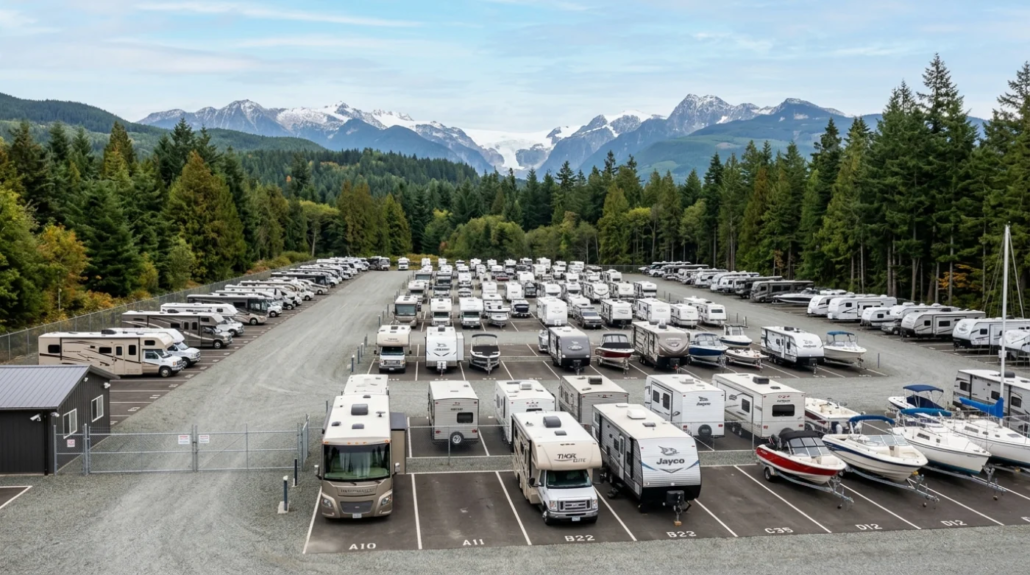
Secure fencing, proper gate access, and enough space to maneuver your rig in and out without it being a stressful production every time.
Wide lanes matter more than people think when they’re towing. A facility that’s tight and awkward to navigate is a minor frustration when you’re calm and a real problem when you’re tired or pressed for time. Ask about the lane width and the turning radius before you commit, especially if you’re storing a longer trailer or a large motorhome.
Ask about access hours as well. Some facilities lock down early in the evening, which doesn’t work if you’re trying to hook up and head out on a Friday after work. Pacific Rim Storage is set up to accommodate realistic access needs, not just business-hours-only access.
Lighting and perimeter security are worth confirming. An unstaffed gravel lot with a basic padlock isn’t the same as a properly fenced facility with monitored gate access, and the difference matters over a long storage period.
Final Thoughts
RV and boat storage in the Comox Valley doesn’t have to be complicated, but it does reward people who plan ahead and prep properly. Book early, do the winterization work before drop-off, and choose a facility that takes security and access seriously.
If you’re evaluating facilities in the area to see why you should store your vehicle with us, our Courtenay location features excellent options for RVs, boats, and trailers of various sizes. Give Pacific Rim Storage a call or stop by and we can walk you through what’s available and what will actually fit your rig.
Frequently Asked Questions
When should I book RV or boat storage in Courtenay for the winter?
September is the right time to start looking. Facilities in the Comox Valley fill up through October as the season winds down, and waiting until the last minute limits your options. If you know you’ll need storage, booking a spot before your last trip of the season is the easiest approach.
Do I need to winterize my RV before putting it in storage near Courtenay?
Yes, and it’s worth doing properly. The Comox Valley’s wet winters mean sustained moisture exposure even in covered storage. Draining the water system, adding antifreeze to the lines, cleaning the interior, and placing moisture absorbers inside will protect your investment through the off-season.
Can I store a boat on a trailer at a storage facility in the Courtenay area?
Yes, most facilities that handle RV storage also accommodate trailered boats. Confirm the width and length limits when you call, and ask about lane access if you have a larger trailer that requires more room to maneuver.
What documents do I need to store an RV or boat at a storage facility?
Most facilities will ask for valid registration for the vehicle or trailer, a copy of your insurance, and a signed rental agreement. Some require proof that insurance is current on the stored vehicle. It’s worth having those documents ready when you call or come in.