Leaving a vehicle unused for several weeks or months involves more than finding an open parking space. Without proper preparation, batteries drain, tires develop flat spots, fuel deteriorates, and moisture can contribute to mildew, corrosion, and unpleasant interior odours.
These concerns are especially important on Vancouver Island, where damp coastal weather can affect vehicles stored through the fall and winter. Whether you are travelling, moving, renovating, storing a seasonal vehicle, or simply freeing up space at home, a few preventive steps can help keep your vehicle ready for the road.
Pacific Rim Storage provides vehicle storage options at select locations across Vancouver Island. Available space types, dimensions, access, and facility features vary by branch, so contact your preferred location before making storage arrangements.
Who Is Long-Term Vehicle Storage For?
Long-term vehicle storage can be useful for:
- Snowbirds and seasonal travellers
- Students leaving Vancouver Island temporarily
- Homeowners who have lost garage access during a renovation
- People moving, downsizing, or working away from home
- Owners of classic cars, convertibles, motorcycles, and second vehicles
- Businesses storing seasonal vehicles, trailers, or equipment
- RV and boat owners who need to free up driveway or property space
If a vehicle will remain unused for more than four to six weeks, it is worth preparing it properly rather than treating storage as ordinary parking.
1. Choose the Right Vehicle Storage Option
Start by considering your vehicle’s dimensions, value, storage period, and required level of weather protection.
Indoor or Enclosed Storage
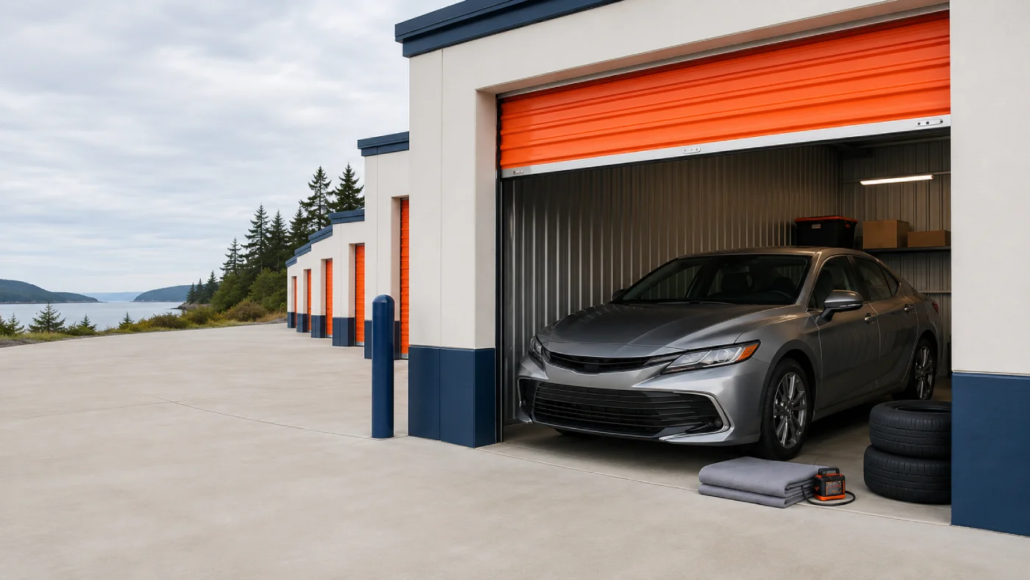
An enclosed, drive-up storage unit provides additional separation from rain, wind, falling debris, and direct exposure to Vancouver Island’s coastal weather. It can be a suitable option for cars, motorcycles, collector vehicles, and other vehicles that may benefit from greater protection.
Drive-up access is generally the most practical unit type for a car because the vehicle can be moved directly into the space without navigating through an interior building.
Outdoor Vehicle Storage
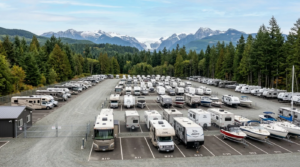
Outdoor parking can be a practical option for larger vehicles, work vehicles, trailers, boats, and RVs. A properly fitted breathable cover may provide additional protection for compatible vehicles, but avoid using a plastic tarp because it can trap condensation against the vehicle.
Before booking, measure the vehicle’s complete length, width, and height. Include mirrors, roof racks, hitches, spare tires, trailers, and other accessories.
Explore available options through our storage units page or contact a specific facility such as Victoria, Mill Bay, Duncan, Nanaimo, Salt Spring Island, or Courtenay.
2. Clean and Protect the Exterior
Wash and thoroughly dry the vehicle before placing it into storage. Dirt, bird droppings, tree sap, road grime, and other residue can bond to the finish or hold moisture against painted and metal surfaces.
Before storage:
- Wash and wax the exterior
- Clean the wheels and wheel wells
- Clean the undercarriage where practical
- Remove leaves and debris from drainage areas
- Check for chips, exposed metal, or early signs of corrosion
- Make sure the vehicle is completely dry
Cleaning the undercarriage can be particularly important after driving through areas exposed to road treatment, mud, saltwater spray, or residue around ferry terminals and coastal roads.
For outdoor storage, use a fitted, breathable vehicle cover designed for your specific vehicle type. A loose tarp can move in the wind, damage the finish, and trap moisture underneath.
3. Control Moisture Inside the Vehicle
Persistent coastal humidity can contribute to musty odours, mildew, upholstery damage, and surface corrosion. Before storing the vehicle, clean and dry the interior carefully.
Remove all food, garbage, reusable cups, damp clothing, and other materials that may attract pests or retain moisture. Vacuum the carpeting and upholstery, wipe down interior surfaces, and make sure the floor mats are dry.
Moisture-absorbing products may help reduce humidity inside the cabin. Use products designed for enclosed automotive spaces and follow the manufacturer’s directions.
Avoid leaving the windows widely open. Whether limited ventilation is appropriate depends on the storage environment, security considerations, and the vehicle manufacturer’s recommendations.
4. Prepare the Fuel and Engine
Fuel can deteriorate when a vehicle sits unused for an extended period. Before storing a gasoline-powered vehicle:
- Fill the fuel tank to reduce the amount of air and potential condensation inside
- Add an appropriate fuel stabilizer
- Follow the stabilizer manufacturer’s instructions
- Run or drive the vehicle as directed so treated fuel circulates through the system
Consider changing the oil and filter before a longer storage period. Used engine oil can contain moisture and contaminants, although the correct service schedule depends on the vehicle and storage duration. Consult your mechanic or owner’s manual when storing a vehicle for six months or longer.
Check other essential fluids and inspect the vehicle for existing leaks before bringing it to the storage facility.
5. Protect the Battery
A connected battery gradually loses charge while a vehicle is sitting. After several months, it may be deeply discharged and could require replacement rather than a simple boost.
Depending on the vehicle and storage environment, you may:
- Connect an approved battery maintainer where electrical access is permitted
- Disconnect the battery according to the manufacturer’s instructions
- Remove and store the battery in an appropriate location
Battery maintainers and trickle chargers are not the same. Use a device designed to monitor and maintain the correct charge without continuously overcharging the battery.
Be aware that disconnecting a battery can affect vehicle electronics, alarm systems, saved settings, and security features. Check the owner’s manual first.
6. Prevent Tire Flat Spots
Tires gradually lose pressure, and the weight of a stationary vehicle can create flat spots over time.
Before storage:
- Inflate each tire to the vehicle manufacturer’s recommended pressure
- Check the tires for existing cracks or damage
- Avoid exceeding the maximum pressure shown on the tire
- Consider tire cradles or purpose-built pads for longer storage periods
Tire cradles can help distribute the vehicle’s weight and may be particularly useful for heavier vehicles or storage lasting six months or longer.
Jack stands should only be used when recommended for the vehicle and positioned correctly. Improper lifting can damage the suspension, frame, or underbody and may create a safety hazard.
7. Reduce the Risk of Rodents and Pests
A quiet stored vehicle can provide shelter for mice and other pests. Engine compartments, air intakes, upholstery, and wiring can all be vulnerable.
To reduce the risk:
- Remove food, wrappers, and scented items
- Vacuum the cabin and cargo area
- Check that doors, windows, and the trunk close properly
- Use vehicle-safe pest deterrents where permitted
- Inspect the storage area and vehicle periodically when possible
Some vehicle owners block exhaust openings or air intakes during storage. Only use visible, removable materials designed for this purpose, and place a clear reminder on the steering wheel so every obstruction is removed before starting the vehicle.
8. Review Insurance and Storage Requirements
Speak with your insurance broker before placing a vehicle into long-term storage. In British Columbia, different coverage options may apply when a vehicle will not be driven, but the appropriate policy depends on the vehicle, location, and circumstances.
Also ask the storage facility about:
- Registration and insurance requirements
- Whether the vehicle must be operational
- Fuel or fluid restrictions
- Access hours
- Battery charging rules
- Acceptable vehicle covers
- Required notice before moving the vehicle
- Prohibited repairs or maintenance on-site
Do not assume that every location provides the same vehicle storage type or facility features.
9. Should You Start the Vehicle During Storage?
A brief cold start is generally not the same as exercising the vehicle properly. Starting the engine for only a few minutes may not allow it to reach full operating temperature, and moisture may remain in the engine and exhaust system.
When a vehicle has been properly prepared with stabilized fuel and appropriate battery care, it may be better to leave it stored rather than repeatedly starting it for short periods.
When periodic driving is practical, permitted, insured, and recommended by the vehicle manufacturer, the vehicle should be driven long enough to reach normal operating temperature. Consult a qualified mechanic for collector, specialty, hybrid, electric, or unusually valuable vehicles.
10. Check the Vehicle During Longer Storage
When possible, inspect a long-term stored vehicle periodically without necessarily starting it.
Look for:
- Fluid leaks
- Tire pressure loss
- Signs of rodents
- Moisture or musty odours
- Damage to the vehicle cover
- Battery or charger problems
- Corrosion or surface changes
For storage lasting longer than six months, arrange a more thorough mid-storage check or ask a trusted person to inspect the vehicle if you are away.
Removing Your Vehicle From Storage
Do not immediately start the vehicle and drive away after several months in storage. Complete a basic inspection first.
Before the first drive:
- Remove the vehicle cover and all pest-blocking materials.
- Look underneath the vehicle for leaks.
- Inspect the engine bay for nesting materials or damaged wiring.
- Check and adjust tire pressure.
- Reconnect or charge the battery correctly.
- Check the oil, coolant, brake fluid, and other essential fluids.
- Inspect belts, hoses, tires, and visible rubber components.
- Confirm that the brakes operate normally.
- Start the vehicle according to the manufacturer’s directions.
- Drive carefully and listen for unusual sounds or vibration.
A professional mechanical inspection may be advisable after an especially long storage period or when the vehicle shows signs of leaks, pest activity, braking issues, or electrical problems.
Vehicle Storage on Vancouver Island
Vancouver Island’s relatively mild temperatures do not eliminate the risks associated with seasonal storage. Persistent rain, coastal humidity, and temperature changes can still contribute to condensation, rust, battery drain, interior mildew, and deterioration of exposed materials.
A managed vehicle storage space can provide a more practical alternative to leaving a vehicle on the street, in an exposed driveway, or in a garage needed for household storage or renovations.
Pacific Rim Storage serves communities across Vancouver Island, including:
Vehicle storage availability and space types vary by location.
Frequently Asked Questions
How long can a car sit before storage problems develop?
Battery drain, tire-pressure loss, moisture, and fuel deterioration can begin within the first several weeks. A car stored for more than four to six weeks should receive basic preparation. Vehicles stored for six months or longer may require additional mechanical advice and periodic inspections.
What is included with vehicle storage?
Vehicle storage generally provides a designated indoor unit or outdoor parking space, depending on the location and availability. Access, security features, electrical availability, space dimensions, and other services differ between facilities. Confirm exactly what is included with the selected branch.
What size storage unit fits a car?
A 10-by-20-foot unit is often associated with standard passenger vehicles, while larger trucks and SUVs may require more space. However, nominal unit dimensions do not guarantee that a particular vehicle will fit. Door width, turning space, mirrors, vehicle height, and actual interior measurements must also be considered.
Measure the vehicle and confirm suitability with the storage team before booking.
Can motorcycles use a smaller storage unit?
A motorcycle may fit into a smaller drive-up unit than a passenger vehicle, making it a more economical option in some cases. The appropriate unit depends on the motorcycle’s dimensions, the number of motorcycles, required manoeuvring room, and whether additional gear will be stored.
Is indoor storage better for a classic vehicle?
An enclosed unit generally provides more separation from direct rain, wind, debris, and outdoor exposure. This can make it preferable for classic, collector, or higher-value vehicles, particularly during Vancouver Island’s wet season. The decision should also account for the vehicle’s value, insurance requirements, ventilation, and storage duration.
Should I keep insurance on a stored vehicle?
Discuss your situation with an insurance broker before storage. Coverage requirements and options vary depending on whether the vehicle remains registered, where it is stored, whether it will be driven, and the terms of your insurance policy.
How do I choose the right vehicle storage option?
Consider the vehicle’s full dimensions, value, storage duration, required weather protection, access frequency, and budget. Then compare indoor drive-up units with outdoor parking options available at nearby branches such as Victoria, Mill Bay, Duncan, Nanaimo, Salt Spring Island, or Courtenay / Comox Valley.
How do I contact Pacific Rim Storage?
You can contact a specific facility directly, including Victoria, Mill Bay, Duncan, Nanaimo, Salt Spring Island, or Courtenay / Comox Valley, or use the Pacific Rim Storage contact page for general assistance.
Find Vehicle Storage Near You
Prepare your vehicle properly and choose a storage space that suits its size, value, and intended storage period.
Available Pacific Rim Storage facilities include:
- Victoria
- Mill Bay
- Duncan
- Nanaimo
- Salt Spring Island
- Courtenay